

Hey there! As a supplier of self-cleaning filters, I often get asked whether these filters can be used in power generation plants. Well, the short answer is yes! But let's dig deeper into this topic and explore why self-cleaning filters are a great fit for power generation facilities.
The Need for Filtration in Power Generation Plants
Power generation plants, whether they're coal-fired, gas-fired, nuclear, or hydroelectric, rely on a continuous supply of clean water. Water is used for various purposes in these plants, including cooling, steam generation, and as a working fluid in some cases. However, the water sources available to power plants can be contaminated with a variety of impurities, such as sediment, debris, algae, and even microorganisms.
These impurities can cause a range of problems in power generation systems. For example, sediment and debris can clog pipes, valves, and heat exchangers, reducing the efficiency of the plant and increasing maintenance costs. Algae and microorganisms can grow on the surfaces of equipment, leading to biofouling and corrosion. In addition, the presence of impurities in the water can affect the quality of the steam produced, which can have a negative impact on the performance of turbines and other equipment.
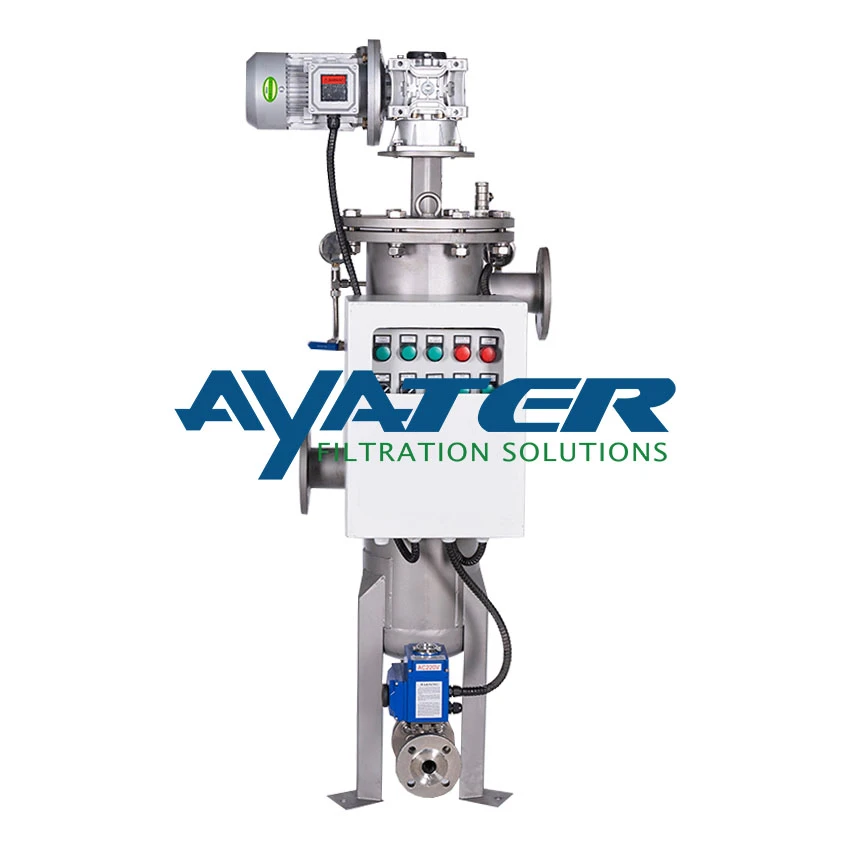

To prevent these problems, power generation plants need to have effective filtration systems in place. These systems are designed to remove impurities from the water before it enters the plant's equipment, ensuring that the water is clean and free of contaminants.
How Self-Cleaning Filters Work
Self-cleaning filters are a type of filtration system that is designed to automatically remove accumulated debris from the filter element without the need for manual intervention. There are several different types of self-cleaning filters available, but they all work on the same basic principle: a mechanism is used to remove the debris from the filter element and flush it out of the filter.
One common type of self-cleaning filter is the Automatic Scraper Strainer. This type of filter uses a scraper blade to remove the debris from the surface of the filter element. As the water flows through the filter, the debris accumulates on the surface of the filter element. When the pressure drop across the filter reaches a certain level, the scraper blade is activated and moves along the surface of the filter element, scraping off the debris. The debris is then flushed out of the filter through a drain valve.
Another type of self-cleaning filter is the Auto Backwash Filter. This type of filter uses a backwashing process to remove the debris from the filter element. When the pressure drop across the filter reaches a certain level, the flow of water through the filter is reversed. This causes the debris to be dislodged from the filter element and flushed out of the filter through a drain valve.
A third type of self-cleaning filter is the Automatic Backflushing Filter. This type of filter uses a backflushing process similar to the auto backwash filter, but it also has a built-in controller that automatically monitors the pressure drop across the filter and initiates the backflushing process when necessary.
Advantages of Using Self-Cleaning Filters in Power Generation Plants
There are several advantages to using self-cleaning filters in power generation plants. Here are some of the key benefits:
- Continuous Operation: Self-cleaning filters are designed to operate continuously without the need for manual intervention. This means that the filtration system can keep the water clean and free of contaminants at all times, ensuring that the plant's equipment operates efficiently.
- Reduced Maintenance: Because self-cleaning filters automatically remove accumulated debris from the filter element, they require less maintenance than traditional filtration systems. This can save time and money for power generation plants, as they don't have to shut down the system to clean or replace the filter element.
- Improved Efficiency: By removing impurities from the water, self-cleaning filters can help to improve the efficiency of power generation plants. This is because clean water can transfer heat more effectively, which can reduce the energy consumption of the plant.
- Longer Equipment Life: The presence of impurities in the water can cause wear and tear on the plant's equipment, leading to premature failure. By using self-cleaning filters to remove these impurities, power generation plants can extend the life of their equipment and reduce the need for costly repairs and replacements.
- Environmental Benefits: Self-cleaning filters can help to reduce the environmental impact of power generation plants. By removing impurities from the water, these filters can prevent the release of contaminants into the environment, which can help to protect water quality and aquatic ecosystems.
Considerations for Using Self-Cleaning Filters in Power Generation Plants
While self-cleaning filters offer many advantages for power generation plants, there are also some considerations that need to be taken into account when selecting and installing these filters. Here are some of the key factors to consider:
- Flow Rate: The flow rate of the water through the filter is an important consideration. The filter needs to be able to handle the required flow rate without causing a significant pressure drop.
- Particle Size: The size of the particles that need to be removed from the water is another important consideration. Different types of self-cleaning filters are designed to remove particles of different sizes, so it's important to select a filter that is appropriate for the specific application.
- Water Quality: The quality of the water source can also affect the performance of the self-cleaning filter. For example, if the water contains a high concentration of sediment or debris, a more robust filter may be required.
- Operating Conditions: The operating conditions of the power generation plant, such as temperature, pressure, and pH, can also affect the performance of the self-cleaning filter. It's important to select a filter that is designed to operate under the specific conditions of the plant.
- Cost: The cost of the self-cleaning filter is also an important consideration. While these filters can offer significant savings in terms of maintenance and energy costs, they can also be more expensive to purchase than traditional filtration systems. It's important to weigh the costs and benefits of using a self-cleaning filter before making a decision.
Conclusion
In conclusion, self-cleaning filters are a great option for power generation plants. These filters offer many advantages, including continuous operation, reduced maintenance, improved efficiency, longer equipment life, and environmental benefits. However, it's important to carefully consider the specific requirements of the plant and select a filter that is appropriate for the application.
If you're a power generation plant operator or engineer and you're interested in learning more about self-cleaning filters, I'd be happy to help. We offer a wide range of self-cleaning filters that are designed to meet the needs of different power generation applications. Contact us today to discuss your filtration requirements and find out how we can help you improve the efficiency and reliability of your power generation plant.
References
- "Filtration Systems for Power Generation Plants." Filtration + Separation, [publication date].
- "Self-Cleaning Filters: A Guide for Power Generation Applications." Water Technology, [publication date].
- "Advantages of Using Self-Cleaning Filters in Power Plants." Power Engineering Journal, [publication date].