

Hydraulic oil filters are designed to remove particulate matter, water, and other contaminants from hydraulic fluid. Particulate matter can cause wear on components, clog lines, and reduce the efficiency of hydraulic systems. Water can cause corrosion and rusting of components.
Why Choose Us
Excellent Quality
We use industry leading technology and international quality standards to manufacture our filtration products.
Competitive Price
We offering a higher-quality product or service at an equivalent price. As a result we have a growing and loyal customer base.
Support Customization
Many of the industrial filtration products we offer can be customized to meet specific industry requirements.
Ship Globally
As a manufacturer, we ship directly to customers worldwide, saving costs and shortening lead times to customers.


Four Unique Advantages Of Hydraulic Oil Purifier
Using special high-precision filtration technology, it can effectively remove mechanical impurities, moisture, organic acids, etc. The moisture and mechanical impurities in the treated hydraulic oil can meet the requirements of the normal operation of the equipment.
The heating system adopts an optimized pipeline design with a low heating load to ensure uniform heating. Using multiple sets of heating, the heating power input is automatically controlled according to the real-time oil temperature. It can make the equipment more energy-saving. At the same time, it avoids overheating and carbonization of the oil.
The Hydraulic Oil Purifier machine has complete demulsification ability, an advanced and unique degassing and dehydration system. It uses three-dimensional evaporation technology and multi-level oil-water separation technology so it can rapidly separate water and gas in the oil.
The Hydraulic Oil Purifier advanced media heat-absorbing condensation system, automatic condensate separation device, automatic constant temperature control, automatic defoaming control ensure the high-performance operation of the equipment. Besides, the operation is simple, safe, and reliable.
What Are The Precautions For Using a Hydraulic Oil Purifier Machine?
Do not use the machine in an environment with flammable or explosive vapours.
When you turn on the machine, it will heat the oil. If there are flammable or explosive vapours present, this could create a fire or explosion hazard.
Do not use the machine if the oil is highly viscous.
If the oil is too viscous, it will not flow through the machine properly and may cause damage.
Do not use the machine if the oil is contaminated with water.
If the oil is contaminated with water, it will not be purified properly and may cause damage to the machine.
Do not use the machine if the oil is dirty or cloudy.
If the oil is too dirty or cloudy, it will not be purified properly and may cause damage to the machine.
Do not use the machine if the oil level is low.
If the oil level is too low, it will not be purified properly and may cause damage to the machine.
Always disconnect the power supply before cleaning the machine.
Disconnecting the power supply will prevent the machine from turning on unexpectedly and causing injury.
Do not use harsh chemicals or solvents to clean the machine.
Harsh chemicals or solvents can damage the machine. Only use mild soap and water to clean it.
Always position the machine on a level surface.
If the machine is not level, it may not operate properly.
Do not use the machine if any parts are damaged.
If any parts are damaged, the machine will not operate properly and may cause injury.
Do not disassemble the machine.
Disassembling the machine can damage it and may cause injury. If you need to service the machine, please contact a qualified technician.

Extend the life of the hydraulic system: The hydraulic oil purifier can effectively remove pollutants and gases in the hydraulic oil, thereby reducing corrosion and damage to the hydraulic system.
Improve the efficiency of the hydraulic system: The purified hydraulic oil has high fluidity and lubricity, which helps to improve the efficiency of the hydraulic system.
Reduce maintenance costs: By reducing failure and damage to the hydraulic system, hydraulic oil purifiers can reduce maintenance costs.
Improve production efficiency: The use of hydraulic oil purifiers can ensure the stability and reliability of the hydraulic system, thereby improving production efficiency.
Environmental protection: The Hydraulic Oil Purifier can effectively reduce the pollution of hydraulic oil and help protect the environment.
Types Of Hydraulic Oil Purifier Systems
Offline Filtration Systems
Offline filtration systems function autonomously from the primary hydraulic circuit, offering continuous filtration and maintenance capabilities without disrupting system operation. These systems typically consist of dedicated filtration units equipped with their own pumps, filters, and reservoirs. By operating independently, offline systems can target specific areas or components within the hydraulic system that require intensive filtration, ensuring thorough contaminant removal without affecting overall system performance.
Inline Filtration Systems
Inline filtration systems are seamlessly integrated into the main hydraulic circuit, filtering hydraulic oil as it flows through the system. These systems are designed to remove contaminants in real time, preventing their accumulation and safeguarding system components from wear and damage. Inline filters are strategically installed at critical points within the hydraulic system, such as before sensitive components or after high-wear areas, ensuring comprehensive filtration coverage.
Kidney Loop Filtration Systems
Kidney loop filtration systems utilize a dedicated loop within the hydraulic circuit to recirculate a portion of hydraulic oil through a specialized filtration unit. This dedicated loop, often called the “kidney loop,” allows for enhanced hydraulic fluid filtration, targeting specific contaminants and maintaining oil cleanliness levels beyond what inline filtration systems can achieve alone. Kidney loop systems are particularly beneficial for critical components or systems requiring ultra-clean oil, such as high-precision machinery or hydraulic systems operating in harsh environments. Kidney loop systems contribute to prolonged equipment lifespan and improved system reliability by continuously purifying a portion of the hydraulic fluid.
Mobile Filtration Units
Mobile filtration units offer versatility and convenience for on-site filtration applications, catering to equipment servicing needs in remote locations or during maintenance operations. These portable units are equipped with filtration equipment, pumps, and reservoirs, allowing them to be transported and deployed wherever needed. For example, in a construction site where heavy machinery is used, a mobile filtration unit can be brought in to maintain the cleanliness of the hydraulic systems. Mobile filtration units provide a practical solution for maintaining hydraulic system cleanliness when access to centralized filtration systems may be limited or impractical. Whether servicing equipment in the field or conducting maintenance operations in challenging environments, mobile filtration units offer flexibility and efficiency in ensuring hydraulic system integrity and performance.
After each use of this device, when using it again:
- Check for air leaks and tighten bolts if necessary.
- Check whether the electrical parts on the instrument panel are loose.
- Check that the points of each meter head should not be loose.
- Check that each valve has a good start.
- The vacuum pump oil level should be on the red line. In another word, make sure it is normal.
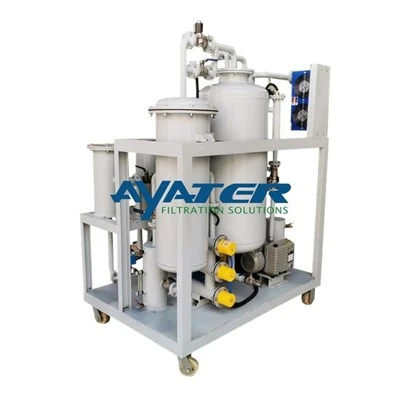
Components Of Hydraulic Oil Purifier
Filters
Filters are the frontline defense against contaminants in hydraulic systems. They are available in various types, each designed to tackle specific pollutants. For instance, depth filters effectively capture larger particles, while surface filters excel at trapping finer contaminants.
Filter Housings
Filter housings serve as protective enclosures for filters, ensuring proper functioning and preventing oil bypass. These housings provide structural support to filters, safeguarding them against damage from pressure fluctuations and external impacts. Additionally, they facilitate easy installation and sealing of filters, minimizing the risk of leaks, and maintaining filtration effectiveness.
Valves and Gauges
Valves and gauges are integral components of hydraulic oil filtration systems, responsible for monitoring and controlling oil flow and pressure. Valves regulate hydraulic oil flow through the filtration system, ensuring optimal filtration rates while maintaining system pressure. They act as the ‘traffic controllers’ of the system, ensuring that the right amount of oil is flowing through the filters at all times. Gauges, on the other hand, provide real-time feedback on pressure levels and filter conditions, enabling operators to identify potential issues and take corrective actions promptly. By maintaining proper oil flow and pressure, valves and gauges contribute to hydraulic systems’ efficient operation and longevity.
Bypass Systems
Bypass systems are safety features designed to ensure the continuous operation of hydraulic systems, even in the event of filter clogging. When filters become overly saturated with contaminants, bypass systems divert oil flow away from the obstructed filters, allowing uninterrupted operation. This is particularly useful in situations where a filter is clogged and needs to be replaced, but the system cannot be shut down. While bypass systems prevent system shutdowns, it is important to note that oil passing through bypasses may not undergo filtration, leading to reduced overall filtration efficiency. Therefore, regular filter condition monitoring and timely filter replacement are crucial for maintaining optimal filtration performance and preventing excessive reliance on bypass systems.
Functions For Hydraulic Oil Purifier
Strong emulsification, dehydration, degassing system, the use of large dissolution, enhanced stereo-flash tower and film evaporation technology and large area multi-level oil, water, gas separation technology.
Combination of coalescence separation and vacuum dehydration.
Deep level, high precision FH rectangular filter system.
Hydraulic Oil Filtration Machine has strong ability to remove impurities, the use of high quality filter material, large amount of pollution, corrosion resistance, high temperature resistance, good mechanical strength, high accuracy in addition to impurities, long service life, step by step encryption filtering.
Safe and reliable aviation material and far infrared heating system of Hydraulic Oil Filtration Machine ensure uniform heating of oil products, to ensure that there is no "dead oil area", avoid oil carbonization.
VHF Hydraulic Oil Purifier overcomes the traditional pointer type temperature controller can only set a hot spot of the defect, can be arbitrarily set the upper and lower limits, more intuitive display of the immediate temperature of oil.
Medium heat absorption and condensation system.
VHF Hydraulic Oil Filtration Machine can also use flowmeter and tired time device, the user can automatically measure the amount of oil and work running time.
Our Factory
Ayater Filtration is a manufacture filtration and separation products for applications across many sectors including the Oil and Gas industry, food & beverage, pharmaceutical, biotech, pulp & paper, mining, manufacturing, power generation, agriculture, marine, and so on.
AYATER strives to provide outstanding value with exceptional customer service, excellent product expertise and technical support, and industry-leading and competitively priced products that are in stock on time.

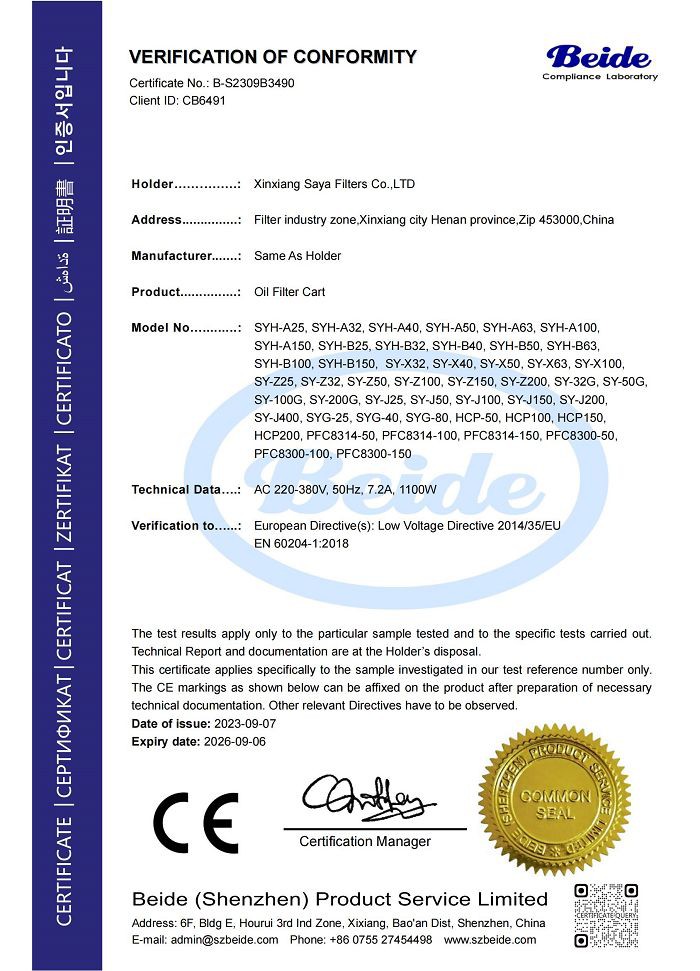
Certifications




FAQ
Q: What is the purpose of the hydraulic oil filter?
Q: How often do you change hydraulic oil filter?
The cost of replacing your hydraulic oil filter will also depend on how often it needs to be replaced. In most cases, it's recommended that you replace your filter every 6 months to 1 year. However, if your system is subject to heavy use or contamination, you may need to replace it more frequently.
Q: What are the benefits of hydraulic oil filtration?
Q: Why is hydraulic filtering important?
Q: Is a hydraulic filter the same as an oil filter?
Q: What is the point of a purifier?
Q: How do you maintain the oil purifier?
Q: Can you clean a hydraulic oil filter?
Q: How does a hydraulic filter work?
Q: Why is oil filtration needed?
Q: What is the most common hydraulic filter?
The most common type of hydraulic filter is a return-line filter, which filters oil as it returns to the reservoir from the system. Another common type is a suction-line filter, which filters oil as it's drawn from the reservoir into the system.
Q: Why do you need to change a hydraulic filter?
Q: How often should you change hydraulic oil filters?
Q: Why do you need a purifier?
Q: How long does a hydraulic oil filter last?
Q: Do you need a hydraulic filter?
Q: What are the advantages of hydraulic filters?
Q: What is the purpose of the oil purifier?
Q: Why is hydraulic oil filtration important?
Q: Where should a hydraulic filter be placed?
We're professional hydraulic oil purifier manufacturers and suppliers in China, specialized in providing high quality customized service. We warmly welcome you to buy hydraulic oil purifier in stock here from our factory. For price consultation, contact us.
hydraulic oil purifier for second maintenance systems, hydraulic oil purifier for bulldozers, hydraulic oil purifier for heat exchangers