

A sand filter is a vital component in all water filtration systems because it is the most effective way to remove suspended solids from water, making it purer and cleaner.
Why Choose Us
Excellent Quality
We use industry leading technology and international quality standards to manufacture our filtration products.
Competitive Price
We offering a higher-quality product or service at an equivalent price. As a result we have a growing and loyal customer base.
Support Customization
Many of the industrial filtration products we offer can be customized to meet specific industry requirements.
Ship Globally
As a manufacturer, we ship directly to customers worldwide, saving costs and shortening lead times to customers.


The Six Settings Of The Sand Filter
Filter: This is what your sand filter does 99% of the time, it filters the swimming pool water.
Waste: In this position, the water runs directly out of the filter, bypassing the sand. This is only used when the pool is very dirty and thorough pool cleaning is necessary. Please note: this setting actually empties your pool.
Backwash: This is a short cleaning cycle of the sand to improve filtration (see 'Maintenance of your swimming pool filter'). It is recommended to do this once a week. The water is washed back through the sand in reverse order (from bottom to top), removing the dirt from the filter material.
Rinse: This setting is used directly after backwashing. Allow the water to run through the filter from top to bottom for 30 seconds while the water is drained into the sewer system. This ensures all the sand is put back in place and that any remaining dirt is drained away, as in the 'waste' position.
Circulation: The water runs from the pump directly back to the swimming pool without going through the pool filter. This means the water isn't filtered.
Closed: All ports are closed. If your pump is still on, make sure to switch it off within seconds as the pressure builds up incredibly fast! This setting is generally used when servicing the pump. This way no water can come back to the pump from the sand filter when you switch off the pump for a while.
How Does a Sand Filter Work?
Sand Filter Backwash
When a certain quantity of water has been filtered or when the sand has reached a certain degree of pollution, the sand filter will automatically switch to backwashing. During the backwashing the pores enlarge upon which the dirt is washed from sand again. Subsequently, this dirt is discharged, together with the backwash water. As a result, the sand filter will not get blocked, retaining its optimal purification qualities.
Diameter of the sand
The diameter of the sand is predominantly dependent on the size of the sand filter, the desired flow and the desired filtration. In most case, for the filtering process, sand with a diameter of 0.8 mm to 1.25 mm is used. This may however vary per installation. For example, a UV installation has a lower flow and sand of 0.4 mm to 0.8 mm will be used to filter more restrictively.
When the sand has a small diameter, the resistance will be increased, resulting in less flow. For this small diameter less capacity is required for backwashing, because the sand is lighter and will thus easily wash with the dirt. Also, in case of a smaller sand grain diameter, you should take into account that more frequent backwashing should take place because more dirt is being captured than when using a larger diameter.When a certain quantity of water has been filtered or when the sand has reached a certain degree of pollution, the sand filter will automatically switch to backwashing. During the backwashing the pores enlarge upon which the dirt is washed from sand again. Subsequently, this dirt is discharged, together with the backwash water. As a result, the sand filter will not get blocked, retaining its optimal purification qualities.
Types Of Sand Filters

Laminated sand filter
Made of durable materials like fiberglass-reinforced polyester. It is a very durable filter and resistant to corrosion.

Blown sand filter
Made of plastic through a process called blowing. It is more economical than laminated filters but less durable.

Cartridge filter
Uses cartridges instead of sand as the filtering medium. This type of filter is easier to maintain than sand filters but less effective at retaining small particles.
Steps To Keeping Your Sand Filter In Tip-Top Condition
Backwash the filter for 3-5 minutes to ensure large organic debris is out of the sand.
Turn off the pool pump. If there is a valve in front of the pump, make sure it is closed.
Remove the lid and basket of the pump.
With the pump lid off, turn the pump on. The pump will push water into the filter but it will not pull water from the pool.
Empty the contents of Filter Cleaner into the pump pot.
It is a good idea to have a bucket of clean water to pour into the pump pot directly after the filter cleaner, to ensure that there is no residue left at the bottom of the pump pot.
Turn off the pump once the filter cleaner and the clean water have entered the filter (approximately 10 seconds).
Let the filter cleaner soak in the filter for 8 – 12 hours. Open the valve at the front of the pump if applicable.
After the appropriate time has elapsed, turn filter dial to backwash and backwash for 5 minutes. If the filter is not backwashed for the proper amount of time, there may be cleaner residue left in the sand. If it gets into the pool water, it can cause balancing and clouding issues.
After the filter has been backwashed, turn pump off and switch filter dial to the rinse position. Rinse the filter for 30 seconds.
Turn off the pump and switch the filter dial back to the filter position.
Turn pump back on.
Benefits Of Using Sand Filter
Cost-Effectiveness
Sand filters are renowned for their affordability. The initial setup cost is low, and they require minimal maintenance. Over time, the savings on repair and operational costs make them a budget-friendly choice for clean water solutions.
Simple Maintenance
One of the biggest advantages of sand filters is their low-maintenance design. Regular backwashing and occasional sand replacement are all needed to keep them functioning efficiently. This simplicity reduces the hassle and cost of upkeep.
Efficient Filtration
Sand filters provide a highly effective filtration process. Water passes through multiple layers of sand, each with a different grain size, trapping particles and contaminants. This process ensures that the filtered water is clean and safe for consumption.
Environmentally Friendly
Sand filters operate with minimal energy consumption, making them an eco-friendly option. They don’t require chemicals for operation, which helps in reducing the environmental impact associated with chemical water treatment methods.
Durability and Longevity
Constructed from robust materials, sand filters are designed to last for many years. Their durability ensures that they remain effective over time, providing reliable water filtration without frequent replacements.
Chemical-Free Filtration
Unlike some filtration systems that rely on chemicals, sand filters use natural filtration to remove impurities. This chemical-free process ensures that the water remains safe and free of harmful substances.
Versatility
Sand filters are versatile and can be used in various settings, from residential homes to large industrial plants. They effectively filter both groundwater and surface water, making them suitable for different water sources and conditions.
High Flow Rate
Sand filters can handle large volumes of water without compromising filtration quality. Their high flow rate makes them ideal for applications requiring significant water throughput, such as swimming pools and municipal water treatment plants.
Improved Water Quality
The filtration process in sand filters significantly enhances water quality. They effectively remove sediments, bacteria, and other contaminants, improving the taste, clarity, and safety of the water. This makes them an excellent choice for ensuring clean and healthy water.
User-Friendly Design
Sand filters are designed with user convenience in mind. Their straightforward setup and operation make them accessible to users of all skill levels. Additionally, the design allows for easy installation and minimal maintenance, reducing the need for professional intervention.

To ensure that your sand filter is operating at its best, it's important to follow a regular maintenance schedule. This will help to keep the filter clean and ensure that it is able to effectively remove dirt and debris from the water.
One of the key tasks in maintaining a sand filter is backwashing. This involves reversing the flow of water through the filter to flush out trapped dirt and debris. This should be done on a regular basis, typically every one to two weeks, depending on the size of the pool and the amount of use it gets.
In addition to backwashing, it's also important to check the sand in the filter regularly to ensure that it is still effective. Over time, the sand will become clogged with dirt and debris, which can reduce the filter's effectiveness. When this happens, the sand will need to be replaced.
Rapid Sand Filter Operation And Cleaning
Only valves 1 and 2 are opened during the quicksand filter’s regular operating stage; the remaining valves are kept closed. In order to transfer filtered water to the storage tank, valve 2 (exit) is opened and valve 1 (inlet) is opened to allow water from sedimentation with coagulation.
Between one and two metres of water are above the sand bed. Backwashing (a process used in the maintenance of various filtration systems, including water filtration systems, air filters, and some pool filtration systems. The purpose of backwashing is to remove accumulated debris, dirt, and other contaminants from the filter media, which helps to maintain the efficiency and effectiveness of the filtration system) is often performed when the head loss reaches 2.5 to 3 m or filter cleaning is performed every one to three days.
Typically, backwashing takes 10 to 15 minutes. Nonetheless, the restart procedure might take a few minutes in total. The first step in backwashing a filter is to shut off valve 1 and allow the water level to drop to the edge of the wash water troughs.
The next step is to close valve 2 and then open valve 6 so that compressed air may flow upward for 2 to 3 minutes, breaking up surface scum and loosening the dirt. To let water through, close valve 6 and open valve 4.
To remove filthy wash water through the wash water drain, open valve 3. Now shut off valves 4 and 3, and let the items on the sand’s surface some time to settle. Now let out filtered water through valves 1 and 5 for a few minutes to clean the water drain.
Our Factory
Ayater Filtration is a manufacture filtration and separation products for applications across many sectors including the Oil and Gas industry, food & beverage, pharmaceutical, biotech, pulp & paper, mining, manufacturing, power generation, agriculture, marine, and so on.
AYATER strives to provide outstanding value with exceptional customer service, excellent product expertise and technical support, and industry-leading and competitively priced products that are in stock on time.

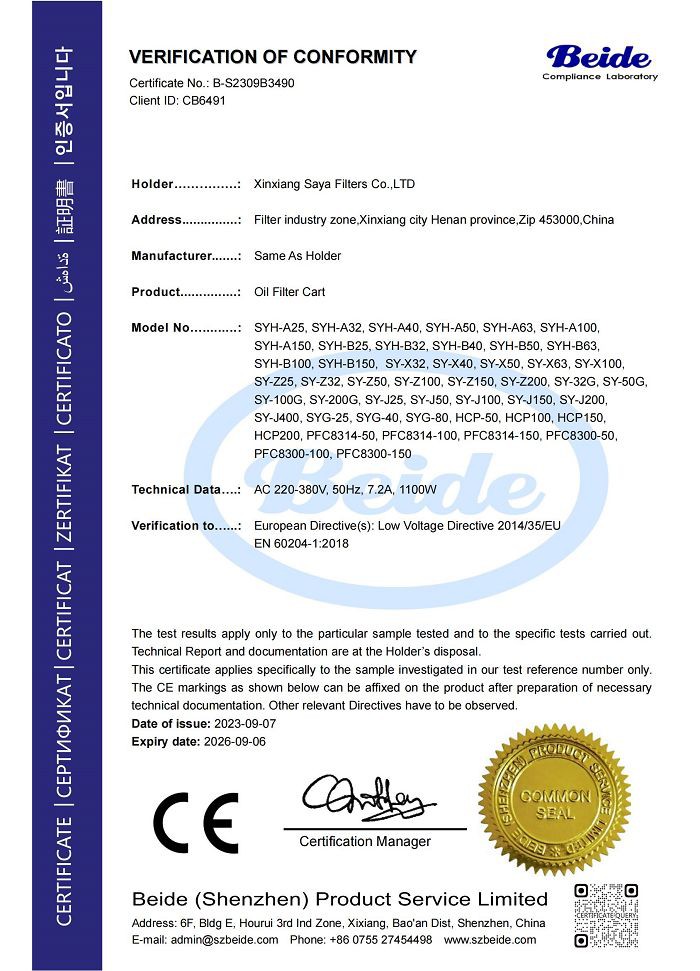
Certifications




FAQ
Q: What is the purpose of a sand filter?
Q: What is the difference between a sand filter and a regular filter?
Q: How often should I backwash a sand filter?
Q: Do sand filters need to be cleaned?
Q: Is a sand filter worth it?
Q: How many years does a sand filter last?
Assuming you properly maintain your swimming pool, you should expect the below timescales on average: - Filter Cartridge – approximately 2,000 working hours, usually around 2-4 years. - Sand Filter Media – around 3-7 years. - Glass Filter Media – about 7-15 years.
Q: Will a sand filter clear cloudy water?
Q: How do I know if my sand filter needs to be cleaned?
Q: How often should I rinse my sand filter?
Q: How much does it cost to install a new sand filter?
Q: Should I run my sand filter all the time?
Q: How to tell if a pool sand filter needs changing?
Q: How long does it take a sand filter to clear a pool?
Most importantly, let your sand filter system run for 24-72 hours at a time. Backwash every three to five hours so that the limescale particles in the filter container are permanently removed and do not make their way back into the pool.
Q: Do you backwash a sand filter?
Q: How often should I backwash my sand filter?
Q: Will a sand filter clear cloudy water?
Q: How many hours a day should I run my sand filter?
Q: Should sand filter be full of water?
Q: How much does it cost to replace a pool sand filter?
Q: How do I unclog a sand filter?
We're professional sand filter manufacturers and suppliers in China, specialized in providing high quality customized service. We warmly welcome you to buy sand filter in stock here from our factory. For price consultation, contact us.
sand filter media, quartz sand filter, sand filter pipes