

Water treatment equipment is designed to remove contaminants from water to make it suitable for a variety of uses, including drinking, irrigation, and industrial processes. The type of equipment used can vary widely based on the source of the water, the contaminants present, and the intended end use of the treated water.
Why Choose Us
Excellent Quality
We use industry leading technology and international quality standards to manufacture our filtration products.
Competitive Price
We offering a higher-quality product or service at an equivalent price. As a result we have a growing and loyal customer base.
Support Customization
Many of the industrial filtration products we offer can be customized to meet specific industry requirements.
Ship Globally
As a manufacturer, we ship directly to customers worldwide, saving costs and shortening lead times to customers.


Types Of Water Treatment Equipment
Self-cleaning filters are designed for fluid filtration in continuous operation. It utilizes methods such as backwashing, mechanical scraping, and continuous rinsing to remove particulate contaminants from liquids. The main advantage of self-cleaning filters is that they are self-cleaning and do not require human intervention. The self-cleaning function can be triggered by a variety of factors, including differential pressure, flow rate, time, manual selection, and more.
Sand filters are designed for the most challenging wastewater conditions. It uses single or multiple filter media to remove suspended solids from water to reduce water turbidity and purify water quality. The industrial sand filters all adopt a simple backwashing system, which is easy to operate, has stable water quality, and can run for a long time.
Bag filter housings are designed to hold single or multiple filter bags in place during the filtration process to remove impurities from the liquid. It uses the microporous filtration effect of the filter bag to trap the solid particles, suspended solids, colloids and other impurities in the liquid on the surface of the bag, so as to achieve the purification of the liquid. Bag filter housings provide an economical filtration solution for high-flow applications.
Pipeline strainers are designed to remove unwanted particles, debris, and impurities from the fluid flowing through the piping system. It can be classified according to its design, including basket strainer, T-type strainer, Y-type strainer, etc. It is usually composed of housings, filter baskets, flanges, flange covers and fasteners. It can ensure that compressors, pumps, instruments and other equipment can work and operate normally to achieve a stable production process.
Cartridge filter housings are designed to accommodate single or multiple filter cartridges to provide a high level of fluid filtration for commercial and industrial applications. It can be used with various types of filter cartridges, including string wound filter cartridges, melt blown filter cartridges, high flow filter cartridges, pleated filter cartridges, etc, with a wide range of flow capacities and contaminant containment capacities. Cartridge filter housings are suitable for filtration in a variety of processes, situations, and fluid types.
What Is Water Treatment Equipment?
Water treatment equipment is mainly used to purify water, removing solid particles, organic matter and other contaminants that may be present in it to meet the needs of industrial and commercial water. They range from relatively compact and simple to complex multi-unit processes that ensure that contaminated water is cleaned and treated, making it suitable for reuse or discharge.
The type of water treatment equipment will vary depending on the needs of the facility, and many of the technologies that make up these devices may be similar. They are not only capable of filtering raw water such as rainwater, groundwater, wells, lakes and rivers, etc. It can also filter industrial wastewater to remove impurities such as debris, organics and suspended solids.
What Is The Importance Of Water Treatment Equipment?


Public Health And Safety
Proper water treatment helps eliminate harmful bacteria, viruses, and other microorganisms that can cause waterborne illnesses such as cholera, dysentery, and hepatitis. This safeguards public health, especially in regions with limited access to clean water.
Environmental Protection
Water treatment equipment allows for the proper disposal or recycling of wastewater, preventing the release of pollutants into natural water bodies. This helps maintain the ecological balance and protects aquatic ecosystems.
Compliance With Regulations
Most regions have strict regulations governing the quality of drinking water and wastewater discharge. Water treatment equipment ensures compliance with these standards, which are typically based on public health and environmental protection guidelines.
Improved Water Quality
Treatment processes such as filtration, disinfection, and softening can significantly improve the taste, odor, and appearance of water, making it more palatable and suitable for various domestic, industrial, and agricultural uses.
Water Conservation And Reuse
Advanced water treatment technologies enable the recycling and reuse of wastewater, reducing the demand for freshwater resources and promoting sustainable water management practices.
Industrial And Commercial Applications
Many industries, such as manufacturing, food processing, and healthcare, rely on high-quality water for their operations. Water treatment equipment is essential for providing the necessary water purity for these applications.
Ensuring Regulatory Compliance
Industries need to adhere to strict regulations and standards regarding water quality and discharge. Utilizing reliable water treatment equipment ensures compliance with these guidelines, safeguarding the environment and public health.
Enhancing Efficiency
Efficient water treatment equipment can significantly reduce operating costs and energy consumption. By removing impurities effectively, less maintenance is required for machinery that comes into contact with the treated water, saving both time and money.
Improving Product Quality
Certain industries require high-quality water for their processes to avoid potential product contamination or damage. Water treatment equipment helps eliminate contaminants that could negatively affect product quality, consistency, and overall performance.
Application fields of water treatment equipment
Boiler Feed Water Treatment
Reliably protects boiler unit compounds and prevents piping failures due to existing contaminants in the feedwater.
Cooling Tower Water Treatment
Effectively protect cooling tower elements from contaminants in circulating water or feed water.
Raw Water Treatment
Used in the pretreatment process and optimized for feed water to improve production performance and process efficiency.
Wastewater Treatment
Suitable for converting polluted water into clean water that can be adequately discharged into the treatment facility or environment.
Agricultural Sector
The treated water can be used for agricultural irrigation and does not endanger the growth and health of crops.
Chemical Processing
Used in the production process of chemicals, solvents, and other products to prevent contamination and maintain product purity.
Food & Beverage
Helps improve the safety and quality of food and beverage products.
Oil & Gas
Used in processes such as the extraction, transportation, and refining of oil and gas products.
Pharmaceutical Industry
Used in the production process of medicines, vaccines and other products to ensure product purity and safety.
How to choose the right water treatment equipment?
There are many different types of water treatment equipment on the market, each with its own unique advantages, and it is necessary to choose the right filter according to the specific needs of the project. Here are some important factors to consider when choosing water treatment equipment:
Determine your water quality needs
The first step in selecting a water treatment equipment is to determine your specific water quality needs. Water quality varies depending on several factors such as source, location, and use. For example, water from a well may contain a higher mineral content than water from a municipal water supply. Therefore, determining your specific water quality needs will help you choose the right equipment that will effectively treat your water.
Determine the type of contaminant you want to remove
Different water treatment equipment is designed to remove specific contaminants. For example, sand filters are effective at removing larger particles and debris from the water, such as dirt. Bag filter housings are excellent at removing smaller particles and microorganisms. Therefore, it is important to determine the type of contaminant to be removed before choosing a water treatment equipment. This will help you choose the best device for your needs.
Consider maintenance requirements
Water treatment equipment requires regular maintenance to ensure that it continues to operate efficiently. When choosing water treatment equipment, consider the maintenance requirements of the equipment and determine if you have the resources and knowledge to perform the maintenance task. Some equipment requires professional repairs, which can increase costs and may require planned downtime.
Evaluate costs and long-term value
Finally, consider the cost and long-term value of the water treatment equipment. While initial cost is an important consideration, it's critical to evaluate the long-term costs associated with the equipment, including maintenance, energy consumption, and replacement parts. In addition, consider operating costs, such as the amount of water waste or emissions generated by the equipment and the environmental impact of these factors.
Water treatment equipment maintenance tips
Replace The Filter Element Regularly
Water treatment equipment typically relies on filter elements to remove impurities and contaminants from the water. Over time, these filter elements can become clogged and ineffective, reducing the efficiency of the filter. Regularly replacing the filter element is one of the easiest and most important maintenance tasks you can perform. Water quality analysis can help you determine the frequency of replacement.
Test The Water Quality
The water quality you use can vary depending on various factors, such as the source, temperature, and the presence of contaminants. Regular water quality testing can identify any changes in water quality that may affect the performance of your water treatment equipment. This will also help you determine the best filter media to use.
Check For Leaks
Leaks in water treatment equipment can cause serious damage, which can lead to system failure. Regularly inspecting filters and components can help you identify any leaks, allowing you to take corrective action faster.
Clean Tanks And Pipes
Sludge and sediment can accumulate in the tanks and pipes of water treatment equipment, reducing the efficiency of the system and creating ideal conditions for bacterial growth. Cleaning these parts regularly can help prevent these problems. It is important to note that cleaning solutions that are safe for equipment and the environment should be used.
Follow The Manufacturer's Recommendations
Each type of water treatment equipment has specific maintenance requirements and is provided by our manufacturer. Users should follow the instruction manual that came with the filter to ensure proper operation of the device and extend its lifespan.
Our Factory
Ayater Filtration is a manufacture filtration and separation products for applications across many sectors including the Oil and Gas industry, food & beverage, pharmaceutical, biotech, pulp & paper, mining, manufacturing, power generation, agriculture, marine, and so on.
AYATER strives to provide outstanding value with exceptional customer service, excellent product expertise and technical support, and industry-leading and competitively priced products that are in stock on time.

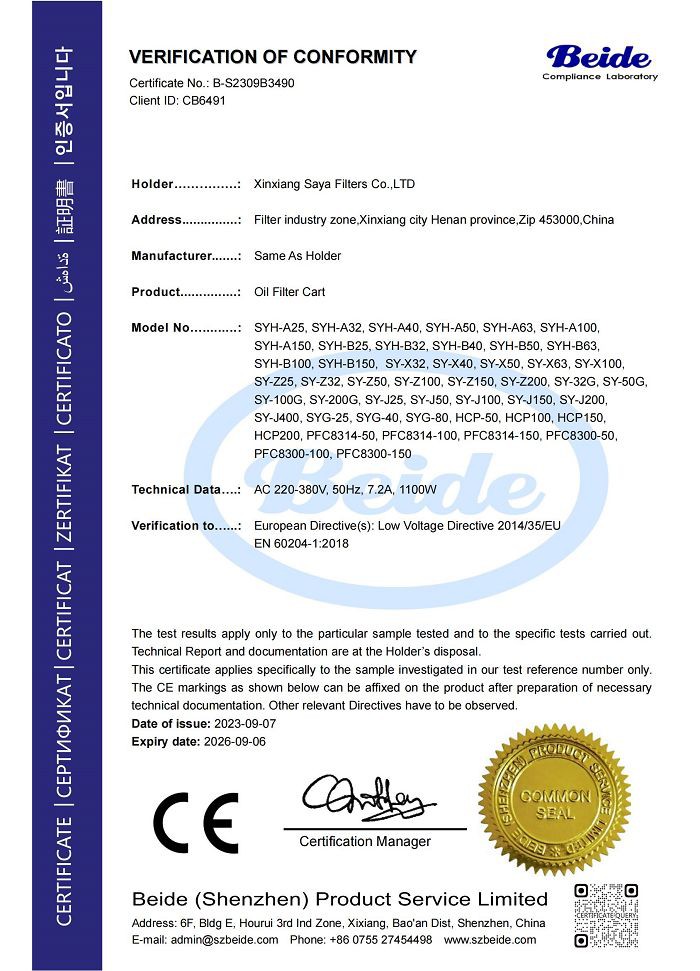
Certifications




FAQ
Q: What is the primary function of water treatment equipment?
Q: What are the common types of contaminants removed by water treatment equipment?
Q: How does reverse osmosis (RO) work in water treatment?
Q: What are the main types of water treatment equipment?
Q: Can water treatment equipment remove pharmaceuticals from water?
Q: What is the difference between water filtration and water purification?
Q: How does water treatment equipment work?
Q: What factors should be considered when choosing water treatment equipment?
Q: Can water treatment equipment remove radioactive contaminants?
Q: How much does a water treatment equipment cost?
Q: How often should water treatment equipment be maintained?
Q: What are the environmental benefits of using water treatment equipment?
Q: Can water treatment equipment be customized for specific applications?
Q: What is the role of activated carbon in water treatment equipment?
Q: How do I maintain my water treatment equipment?
Q: Can water treatment equipment be used for wastewater treatment?
Q: What is the service life of water treatment equipment?
Q: How does water treatment equipment contribute to public health?
Q: Is there a difference in water treatment equipment used for residential and industrial applications?
Q: What are the future trends in water treatment technology?
We're professional water treatment equipment manufacturers and suppliers in China, specialized in providing high quality customized service. We warmly welcome you to buy water treatment equipment in stock here from our factory. For price consultation, contact us.
cooling tower water treatment, boiler water treatment, surface water treatment