

Strainers (STR) are closed vessels that collect solid particles to be separated while passing a fluid through a removable screen. The screens can collect particles down to 0.001 inch in diameter. As well as removing unwanted material, they can also remove wanted materials that can be used elsewhere or in other processes. You can find strainers upstream of sensitive equipment such as flowmeters, pumps, compressors, steam traps, industrial valves and filters.
Why Choose Us
Excellent Quality
We use industry leading technology and international quality standards to manufacture our filtration products.
Competitive Price
We offering a higher-quality product or service at an equivalent price. As a result we have a growing and loyal customer base.
Support Customization
Many of the industrial filtration products we offer can be customized to meet specific industry requirements.
Ship Globally
As a manufacturer, we ship directly to customers worldwide, saving costs and shortening lead times to customers.


How To Choose A Pipeline Strainer?
The Design Criteria
The strainer of the pipeline can be custom fabricated for multiple ports and connections. They are made by using some exotic alloys and also have custom coating. In addition to it, the strainers are engineered to meet the specific designing criteria and have custom coatings. It also involves the velocity of the flow, differential pressure and also the capacity of the particle holding.
The Size of Particle Retention
The pipeline strainers are generally used to protect the downstream processes or equipment from the particulate. To help ensure efficient removal of all types of impurities, the size of the strainer should be smaller than the acceptable level of the particle size.
Pressure Limit and Temperature
It is critical to identify the regulated pressure and also the thermo capability for all different types of strainer used as an industrial equipment. The particular specifications of the strainer can be employed in a vast spectrum of applications and at times may not be adequate enough to meet the needs of the particular protocol lines.
Dimensions
Another critical criteria that should be kept in mind when choosing a strainer is the dimension of the strainer that is being used in the pipeline. If you end up buying a size larger than what is required, the particles may pass through the strainer thereby negatively impacting the functioning of the gear. On the contrary, if the strainer has a smaller size, there can be a fall in the pressure which ultimately leads to impacting the efficiency of the pipeline.
What Are The Pipeline Strainer Types?


Simplex Basket Strainers
Basket strainers come in two types, single and double. A simplex strainer (single basket) is used when the flow or process can be shut down for a short period of time.
Duplex basket strainers
A duplex strainer (double basket) is used when the flow or process cannot be shut down and must continue to flow. The duplex allows you to shut one basket for cleaning while the other is still in operation. The screen is in the shape of a basket and removed from the top and the strainer. These are normally used where larger amounts of trash/solids need to be removed. They can come with a blow-off connection for manual or automatic cleaning.
Y-Type strainers
There are two types of strainers – baskets and Y-type strainers. The Y-type strainer is normally used where there is a small amount of material to be collected. This strainer can be installed in the horizontal or vertical position. The basket must be at the bottom of the pipe or facing the downflow direction to collect the particles. A Y-type strainer can come with a blow-off connection for automatic cleaning. With liquids, Y-type strainers have a greater pressure drop than basket strainers because of their size (comparing the same sizes). However, with gases a Y-strainer has a relatively low-pressure drop.
Inoxpa 81700 Filter
Inoxpa Filters have a wide range of applications in the food processing, cosmetics and some chemical industries as well as in auxiliary services of the pharmaceutical industry. They have a hygienic design and are used to filter particles capable of damaging pumps and other equipment.
How To Select A Pipeline Strainer?
A pipeline strainer is an advanced filter that separates contaminants and particulates from the liquid. Not only does this improve efficiency in a process, but it can reduce maintenance costs, too, since particles won’t damage downstream equipment.
When selecting a strainer for your pipeline, there are several factors to take into account. One of these is the size of the hole and mesh, which determines how many particles can be captured by the strainer.
In general, strainers should have holes slightly smaller than the particles you want to filter. This ensures any foreign debris is captured before reaching downstream equipment and helps protect your investment.
When selecting a basket filtering element, there are a few essential things to take into account. Strainers’ materials used can significantly affect how well the element will hold up under high pressure.
When selecting a pipeline basket strainer, the open area ratio (OAR) should be taken into account. This quantity determines how long a strainer can be used without cleaning or losing pressure across its basket or screen.
In most cases, the OAR is calculated by analyzing the relationship between an internal cross-section area of a basket or screen and its overall open area. A wider opening allows more time for the basket or screen to work without needing cleaning, which may cause pressure loss.

Pipeline strainers can be custom fabricated to have multiple connections and ports, made from exotic alloys, have custom coatings and engineered to meet specific design criteria involving differential pressure, flow velocity and particle holding capacity.
Materials of construction
The best practice is to provide a strainer made of the same material as the pipeline, especially when the temperatures are extreme or fluctuate because different materials have different coefficients of expansion. Corrosive fluids can be handled several ways; exotic alloys, linings/coatings and engineered non-alloys are all options to explore. In addition to the initial cost, each configuration will have different element designs and flow characteristics.
Particle Retention Size
Pipeline strainers are used to protect downstream equipment or processes from particulate, thus to ensure efficient removal the acceptable level of particle size and the performance tolerance must be established. Pipeline strainers are used for macrofiltration applications where the retention efficiency is "nominal" or "approximate".
Factors To Consider Before Choosing Pipeline Strainers
Dimensions: It is very important to select the appropriate dimensions. A larger than required size can result in the passage of unwanted materials that can affect the functioning of the gear. On the other hand, a smaller size can lead to a fall in the pressure that can hamper with efficiency.
Strainer Unit’s Size: The size should always be based on how many dirt particles the unit will collect and how much pressure the strainer can handle. Utilizing a strainer that is tiny will result in added difficulty in keeping the parts dust free. Problems relating to pressure drops can also be observed.
Expected Pressure Fall: Strainers protect components like pumps from unwanted materials. These pumps require a regulated pressure range to work properly. It’s important to figure out the strainer’s allowed pressure drop to ensure that its framework doesn’t cause problems.
Temperature and Pressure Limit: It’s important to determine the regulated pressure and thermo capability for all industrial strainer equipment. These specifications could be used in a broad spectrum of applications and may not meet the needs of specific protocol lines. It is very important to explain why each strainer is different from the rest.
Choice of Materials: The materials in the strainer must match the materials in the pipe. This information is usually found in the same pipe class as in the Material Brochure. They usually cover things like the strainer body and cap. The substance grade while manufacturing the component should be at least similar or better than the rest of the body.
Strainers are crucial components in pipeline systems as they help to filter out solid particles, debris, and other impurities. That can cause damage to downstream equipment, reduce efficiency, and compromise the quality of the end product. The presence of these contaminants can cause blockages, corrosion, and erosion of equipment, leading to costly repairs or replacements.
Strainers also play a crucial role in ensuring the safety and reliability of piping systems. In industries such as oil and gas, chemical processing, and food and beverage, contaminants in the fluid can pose a significant risk to workers, the environment, and the end product. Strainers aid in reducing the risk of harm or contamination by eliminating particles and debris.
In addition, strainers can help prolong downstream equipment’s lifespan by preventing damage from particles and debris. This can lead to significant cost savings over time by reducing the need for repairs and replacements.
The role of strainers in a pipeline is to maintain the integrity and efficiency of the system. By removing unwanted contaminants and protecting downstream equipment.

Strainer And It's Applications In Pipeline
A strainer is a device that is used to retain solid pieces when fluid passes through it in a piping system. A strainer makes the fluid pass through a straining element that has very small holes. The smaller the holes, the smaller the solid particles that will be trapped.
Strainer protect equipment and process from their harmful effects, so lowering maintenance and downtime. Use of rightly selected strainers at correct locations (usually upstream) is a must to protect expensive and critical downstream equipment such as pumps, flow meters, steam traps, control valves etc.
The most common types of strainers used are the Y-type and basket strainers.
Y-strainer: Having a straining element in a side branch that comes off at an angle, forming a letter Y. This type is commonly used in pressurized lines, steam, liquid or gas, but can also be applied in vacuum or suction situation.
Basket strainers work in a similar way to Y strainers but have a different shape. Also due to greater free straining area, size of pressure drops in a basket strainer is small comparing to Y- strainer, so this make this type to be preferred in a liquid application.
Another type of strainer is the conical strainer, in which the straining element is pointed at one end in the shape of a cone. A conical strainer is fitted between flanges directly in the pipeline. In a conical strainer, a straining element should point upstream so that the solid particles will be collected around the outside, next to the pipe wall. If you fit the strainer the wrong way around, the solids collected will block the strainer more quickly.
Our Factory
Ayater Filtration is a manufacture filtration and separation products for applications across many sectors including the Oil and Gas industry, food & beverage, pharmaceutical, biotech, pulp & paper, mining, manufacturing, power generation, agriculture, marine, and so on.
AYATER strives to provide outstanding value with exceptional customer service, excellent product expertise and technical support, and industry-leading and competitively priced products that are in stock on time.

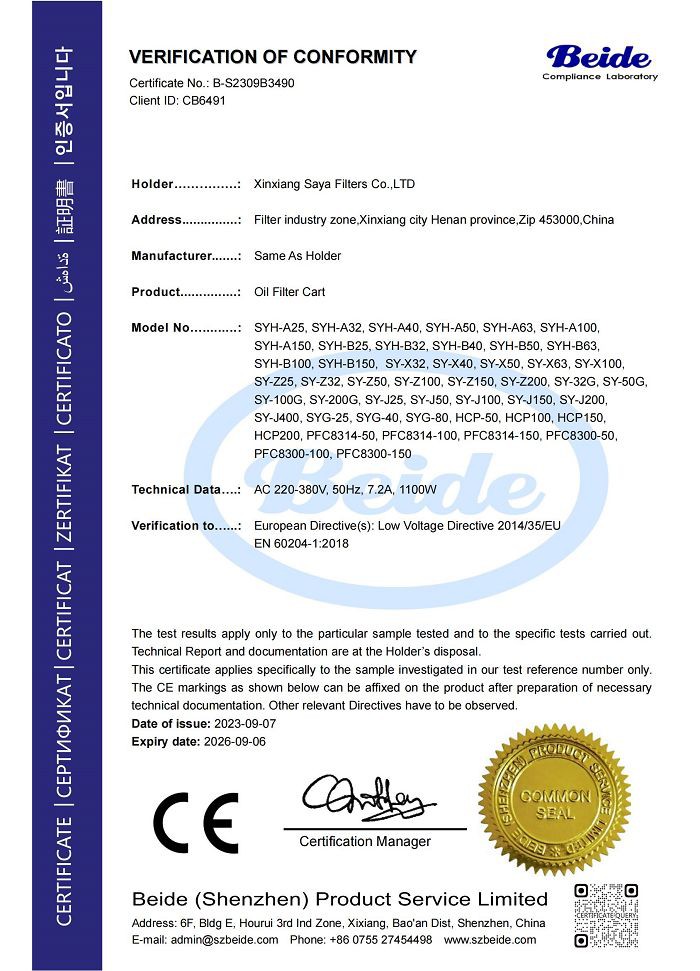
Certifications




FAQ
Q: What is the function of a pipe strainer?
Q: How does a line strainer work?
Q: What is a pipeline strainer?
Q: What are the different types of piping strainer?
Q: What is a strainer vs filter in piping?
Q: How should a strainer be installed?
Q: What is the function of a line strainer?
Q: What is the process of strainer?
Q: How do pipe strainers work?
Q: What is strainer in pump?
Q: What are strainers normally located before?
Q: How is a strainer supposed to be used?
Q: What are the different types of piping strainer?
Q: What are the applications of strainer?
Q: What is a strainer used for in plumbing?
Q: Why is a strainer used in a pipeline?
Q: What is the preventive maintenance of strainer?
Q: How do you use a strainer safely?
Q: What are the safety precautions for strainer?
Q: What is the use of strainer in piping?
We're professional pipeline strainer manufacturers and suppliers in China, specialized in providing high quality customized service. We warmly welcome you to buy pipeline strainer in stock here from our factory. For price consultation, contact us.
grade c pipeline strainer, guarantee for pipeline strainer, modern pipeline strainer