

Selecting the wrong melt blown filter cartridge can lead to premature clogging, inconsistent filtration, excessive pressure drop, and unnecessary operational costs. With numerous micron ratings, sizes, and configurations available, making the optimal choice requires careful consideration of your specific application requirements. This practical guide walks you through the 7 critical factors that ensure you select the perfect melt blown filter element for your industrial filtration needs.

Beyond Micron Rating: A Holistic Selection Approach
While micron rating is important, optimal melt blown cartridge selection requires evaluating multiple interconnected factors that collectively determine filtration performance, service life, and total cost of ownership.
1. Determine the Correct Micron Rating for Your Application
The micron rating of your melt blown filter cartridge determines the size of particles it will capture, but selecting the right rating requires more than just knowing your target particle size.
| Pro Tip: Always consider particle size distribution, not just the largest particle you need to remove. A properly selected gradient density melt blown cartridge can handle a range of particle sizes efficiently. |
| Micron Rating | Typical Applications | Contaminant Types | Considerations |
| 1-5 microns | Final filtration, chemical polishing, high-purity water | Fine sediments, microplastics, precipitated salts | Higher pressure drop, shorter service life with high solids |
| 10-20 microns | General chemical processing, cooling water, pre-filtration | Silt, fine sand, scale particles, process byproducts | Balanced performance for most industrial applications |
| 30-50 microns | Coarse pre-filtration, intake water, high solids applications | Sand, rust flakes, large sediment, coarse contaminants | Long service life, protects downstream equipment |
| 75-100 microns | Very coarse pre-filtration, debris removal, first-stage protection | Large debris, visible particles, gross contamination | Maximum dirt holding capacity, minimal pressure drop |
Selection Strategy: When in doubt, start with a slightly coarser rating than theoretically required. The gradient density structure of melt blown depth filter cartridges provides progressive filtration that can capture smaller particles than the nominal rating suggests.
2. Evaluate Chemical Compatibility with Your Process Fluid
While polypropylene melt blown cartridges offer excellent chemical resistance, specific applications may require careful consideration of fluid chemistry and operating conditions.
- pH Range: Standard polypropylene handles pH 1-14, but extreme pH values at elevated temperatures may require validation
- Organic Solvents: Most hydrocarbons, alcohols, and ketones are compatible, but verify specific chemical resistance
- Oxidizing Agents: Strong oxidizers may require specialized materials or reduced service life expectations
- Temperature Effects: Chemical resistance decreases as temperature increases-verify compatibility at operating temperature
| Critical Warning: Always test chemical compatibility with actual process fluid samples when filtering aggressive chemicals or operating at elevated temperatures. Theoretical compatibility charts provide guidance but cannot account for all variables. |
3. Assess Operating Conditions: Temperature and Pressure
The operating environment significantly impacts melt blown filter cartridge performance and service life. Understanding your specific conditions ensures reliable operation.
Standard Melt Blown Filter Operating Limits:
Maximum Operating Temperature: 140°F (60°C) for continuous service
Peak Temperature: 200°F (93°C) for short durations
Maximum Differential Pressure: 50 psi (3.5 bar) at 68°F (20°C)
Working Pressure: Limited by housing design, typically 150 psi maximum
Temperature Considerations: Higher temperatures reduce melt blown cartridge strength and chemical resistance. For applications above 140°F, consider alternative materials or reduced service life expectations.
Pressure Considerations: The gradient density structure of melt blown filter elements creates progressive pressure drop. Ensure your system can handle the initial and terminal pressure differential.
4. Calculate Flow Rate Requirements and System Capacity
Proper flow rate calculation ensures your melt blown cartridge filter delivers optimal performance without excessive pressure drop or premature clogging.
| Cartridge Size | Maximum Recommended Flow Rate | Typical Service Life | Best Applications |
| 10-inch Standard | 5-10 GPM (19-38 LPM) | Short to medium | Low volume systems, point-of-use filtration |
| 20-inch Standard | 10-20 GPM (38-76 LPM) | Medium | Small to medium process streams, recirculation systems |
| 30-inch Standard | 15-30 GPM (57-114 LPM) | Medium to long | Medium process streams, most industrial applications |
| 40-inch Standard | 20-40 GPM (76-151 LPM) | Long | High volume systems, extended service intervals |
Flow Rate Formula: Maximum Flow Rate (GPM) = [Cartridge Surface Area] × [Flow Rate Factor]. For melt blown cartridges, use a conservative flow rate factor of 0.1-0.2 GPM per square inch to ensure optimal performance and service life.
5. Analyze Contaminant Type and Concentration
The nature and concentration of contaminants in your fluid stream directly impact melt blown filter element selection and expected service life.
Contaminant Analysis Guide:
✓ Particulate Shape: Angular particles (sand, rust) are easier to capture than spherical particles (polymer beads)
✓ Particle Size Distribution: Wide distribution benefits from gradient density; narrow distribution may require different technology
✓ Contaminant Concentration: High solids loading (>100 ppm) requires high dirt capacity design; low loading allows finer filtration
✓ Gelatinous Materials: Slimy or gelatinous contaminants may require specialized surface treatments or alternative technologies
✓ Oil Content: Free oil can blind melt blown cartridges; consider coalescing pre-treatment for fluids with significant oil content
6. Verify Physical Dimensions and Connection Compatibility
Ensuring proper fit with your existing filtration housing is essential for leak-free operation and optimal performance of your melt blown filter cartridges.
- Length Compatibility: Standard lengths include 10", 20", 30", and 40"-verify your housing can accommodate your chosen length
- Diameter Requirements: Common diameters are 2.5" and 4.5"-measure your housing's internal dimensions precisely
- End Cap Configuration: Double open end (DOE) or single open end (SOE) designs must match your housing's configuration
- Seal Type and Material: Standard O-rings are typically EPDM or Nitrile-verify chemical compatibility and temperature resistance
- Core Strength: For high differential pressure applications, specify reinforced polypropylene or stainless steel cores
Installation Tip: Always lubricate O-rings with clean water or compatible lubricant before installation. Never force a cartridge into a housing-misalignment can damage seals and cause bypass.
7. Consider Regulatory and Industry-Specific Requirements
Many industries have specific standards and certifications that impact melt blown filter cartridge selection and documentation requirements.
| Industry | Key Requirements | Certifications to Consider | Documentation Needs |
| Food & Beverage | FDA compliance, cleanability, no extractables | FDA 21 CFR, NSF | Material certifications, compliance statements |
| Pharmaceutical | Low extractables, validation support, traceability | USP Class VI, cGMP | Full traceability, validation guides, extractables data |
| Microelectronics | Ultra-clean, low particle shedding, high purity | SEMI, ISO Class | Particle count data, cleanliness certifications |
| General Industrial | Performance consistency, reliability, cost-effectiveness | ISO 9001 | Performance data, quality certifications |
| "We were experiencing weekly filter changes in our cooling water system until we properly analyzed our contaminant profile. By switching from 10-micron to 25-micron melt blown cartridges with high dirt capacity, we now achieve monthly service life with better overall filtration efficiency and 60% lower maintenance costs." |
Application-Specific Selection Guidelines
Different applications have unique requirements that dictate optimal melt blown filter cartridge specifications:
Cooling Water Systems
- Recommended: 25-50 micron, high dirt capacity
- Rationale: Handles variable sediment loads, extends service life
Chemical Processing
- Recommended: 10-30 micron, chemical resistant
- Rationale: Protects process equipment, maintains product quality
Pre-filtration
- Recommended: 50-100 micron, high flow design
- Rationale: Extends life of final filters, reduces total cost
Food & Beverage
- Recommended: FDA-compliant, 5-20 micron
- Rationale: Meets regulatory requirements, ensures product safety
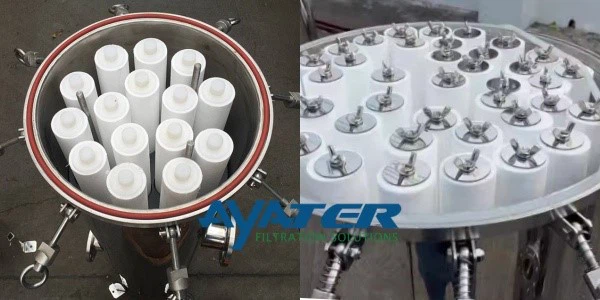
Our Comprehensive Melt Blown Filter Solutions
At Xinxiang Saya Filters Co.,LTD, we offer a complete range of melt blown filter cartridges designed to meet diverse industrial requirements:
- Standard Series: Cost-effective solution for general industrial applications
- High-Capacity Series: Enhanced dirt holding capacity for challenging applications
- Sanitary Series: Meets pharmaceutical and food grade requirements
- High-Temperature Series: Special formulations for elevated temperature applications
- Custom Engineered Solutions: Tailored to your specific performance requirements

Technical Support: Our filtration experts can help you analyze your application requirements and recommend the optimal melt blown filter cartridge configuration. We provide sample testing and performance validation to ensure your complete satisfaction.
|
Need Help Selecting the Perfect Melt Blown Filter Cartridge?
|